Arch Window 1 Clay Cutter - STL Digital: Integrating Precision Tools into Your Creative Workflow
For makers, jewelry designers, and polymer clay artists, the transition from concept to physical product often hinges on the quality and consistency of their tooling. The Arch Window 1 Clay Cutter - STL Digital represents more than just a shape; it is a foundational asset for creators who utilize 3D printing to streamline their production processes. This digital download provides immediate access to a versatile cutting system designed specifically for the demands of modern clay work. By incorporating this STL bundle into your digital library, you establish a reliable standard for sizing and edge definition that supports both creative exploration and commercial consistency.
In a professional or hobbyist workflow, reliance on physical inventory can create bottlenecks. Shipping delays, stock shortages, or limited size ranges can stall a project during its most critical phases. Digital assets like the Arch Window 1 eliminate these friction points. Once payment is processed, the files are instantly available for download, allowing you to move immediately from the planning stage to fabrication. This immediacy is crucial for entrepreneurs and freelancers operating on tight deadlines or responding to trending design aesthetics. Having the ability to print exactly what you need, when you need it, transforms your 3D printer from a prototyping machine into an on-demand manufacturing unit for your studio.
Technical Specifications and Print Preparation
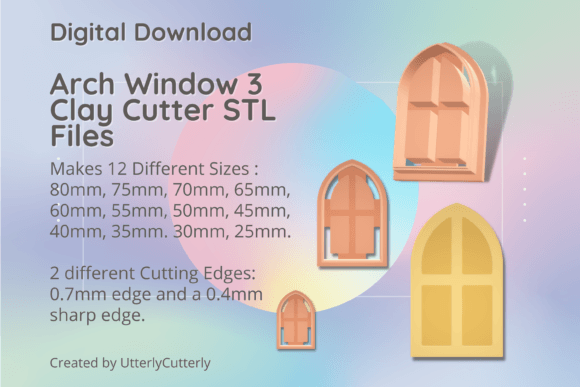
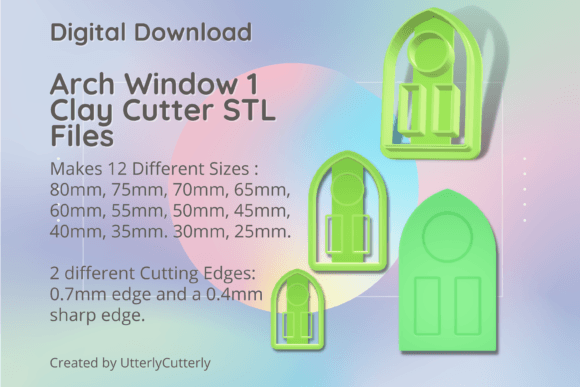
Successful integration of any digital cutter file requires understanding the technical parameters before hitting print. The Arch Window 1 pack is engineered with specific tolerances to ensure functionality across different resin and FDM printers. The bundle includes two distinct cutting edge profiles, each serving a unique purpose in the making process. Understanding the difference between these profiles is essential for selecting the right tool for your current material and desired finish.
- Standard Edge: Features a 0.7mm wall thickness with a 3mm thick base and a total height of 12mm. This profile offers durability and is ideal for general-purpose cutting where tool longevity is prioritized over extreme sharpness.
- Sharp Edge (SE): Abbreviated as SE in the file names, this variant includes a 1mm support wall tapering to a precise 0.4mm cutting edge. It shares the same 3mm base and 12mm height but provides cleaner cuts for detailed work or softer clays.
Before adding these files to your print queue, verify your slicer settings against these dimensions. The 3mm base is designed to provide sufficient rigidity to prevent warping during the curing process while remaining ergonomic for hand pressure. If you plan to use the embossing features included in certain designs, note that the embossing lines are 10.5mm tall. This specification dictates that your clay slab must be thicker than 1.5mm to accommodate the impression without bottoming out or distorting the cut. Incorporating this measurement check into your prep routine prevents material waste and ensures professional results.
Sizing Strategy and Production Planning
Versatility in design often comes down to having the correct scale at hand. The Arch Window 1 bundle addresses this by providing twelve graduated sizes, measured from the longest ends of the arch. This comprehensive range allows for nested designs, progressive sizing for jewelry sets, or adaptable cookie styling without requiring multiple separate purchases. The available sizes are:
- 80mm
- 75mm
- 70mm
- 65mm
- 60mm
- 55mm
- 50mm
- 45mm
- 40mm
- 35mm
- 30mm
- 25mm
From a workflow perspective, this gradation facilitates batch processing. For example, a jewelry maker creating a capsule collection can print the 30mm, 40mm, and 50mm variants simultaneously to create earring, pendant, and bracelet components that share a cohesive visual language. For bakers and confectioners, the larger end of the spectrum supports tiered cake decorations or assorted pastry platters. Because these are digital files, you can curate custom combos easily. You might choose to print only the Sharp Edge versions for the smaller sizes where detail matters most, while utilizing the Standard Edge for larger structural pieces. This selective printing optimizes both resin usage and post-processing time.
Integrating Digital Assets into Studio Organization
Managing a growing library of STL files requires the same organizational discipline as managing physical tools. When you download the Arch Window 1 Clay Cutter - STL Digital, treat it as a permanent asset in your production ecosystem. Create a standardized folder structure on your computer or cloud storage that categorizes files by shape, size, and edge type. Naming conventions matter; keeping the "SE" designation visible in your file manager helps prevent printing the wrong variant during high-volume production runs.
Compatibility with other resources is another key factor. These arch cutters are designed to complement other shapes in our expanding catalog, with new STL files added weekly. By maintaining an organized digital inventory, you can quickly cross-reference new releases with existing assets to identify potential pairings. Perhaps a new floral embosser pairs perfectly with the 60mm Arch Window cutter, or a textured roller aligns with the 40mm size. Viewing these files as modular components rather than isolated tools encourages a more dynamic and efficient creative process. This modularity is particularly valuable for educators and workshop leaders who need to prepare varied kits for students without excessive overhead.
Quality Control and Material Considerations
The performance of a 3D printed cutter is directly linked to print quality and material choice. While the Arch Window 1 files are optimized for ease of printing, user execution determines the final outcome. For resin printers, proper washing and curing are non-negotiable. Uncured resin residue on the cutting edge can transfer to clay, ruining the piece and potentially causing skin irritation. Always perform a tactile inspection of the cutting edge after post-processing. If layer lines are too prominent on the Standard Edge version, consider switching to the Sharp Edge (SE) file or adjusting your layer height settings to 0.03mm or lower for smoother finishes.
Material compatibility extends beyond the printer to the clay itself. Polymer clay, ceramic clay, fondant, and cookie dough all have different viscosities and release properties. The 0.4mm Sharp Edge is generally superior for polymer clay and fondant, providing a clean slice that minimizes dragging. The 0.7mm Standard Edge may perform better with stiffer ceramic clays or dense cookie doughs where a thinner edge might deform under pressure. Testing both edge types with your specific medium during the initial setup phase establishes a baseline for future projects. Documenting which edge works best for which material creates a personal reference guide that speeds up decision-making in future sessions.
Long-Term Value and Sustainable Making
Adopting digital tooling aligns with sustainable making practices by reducing plastic waste associated with shipping and packaging. With the Arch Window 1 Clay Cutter - STL Digital, you produce only what is necessary. If a cutter breaks or wears out after extensive use, replacement is instantaneous and costs only the price of resin or filament. This contrasts sharply with traditional supply chains where replacing a single specialized tool might require minimum order quantities or international shipping.
Furthermore, digital ownership grants you autonomy over your toolset. As your skills evolve or your business pivots, your tool library adapts without physical clutter. You can archive less-used sizes and keep current favorites readily accessible on your printer’s SD card or network drive. For small business owners, this scalability is vital. During peak seasons like holidays or wedding periods, you can rapidly scale up production capacity by printing additional sets of cutters for parallel processing. During slower periods, you simply stop printing, eliminating storage concerns and inventory depreciation.
Ultimately, the Arch Window 1 Clay Cutter - STL Digital serves as a bridge between digital design capability and tangible craftsmanship. It empowers creators to take control of their tooling, ensuring that technical limitations never hinder artistic vision. By understanding the specifications, organizing files effectively, and integrating these cutters thoughtfully into your broader workflow, you build a resilient and responsive making practice. Whether you are producing bespoke jewelry, artisanal baked goods, or educational content, these digital assets provide the precision and flexibility required to execute your ideas with confidence and consistency.