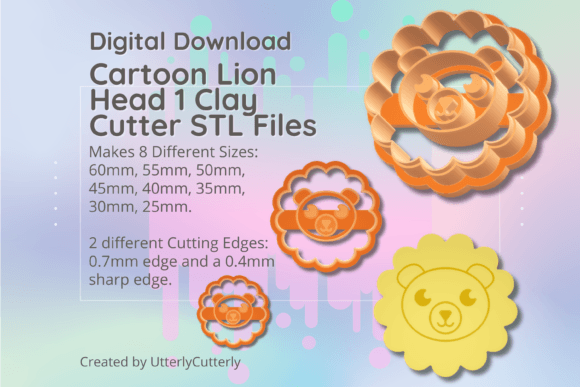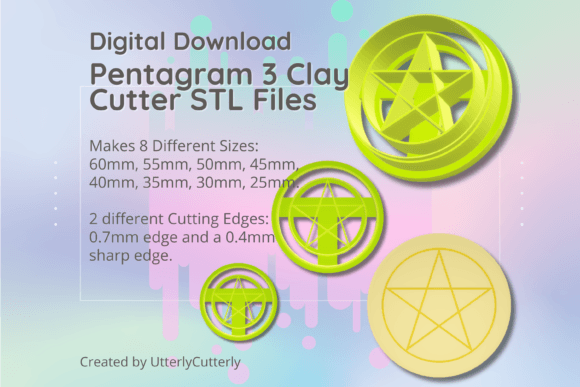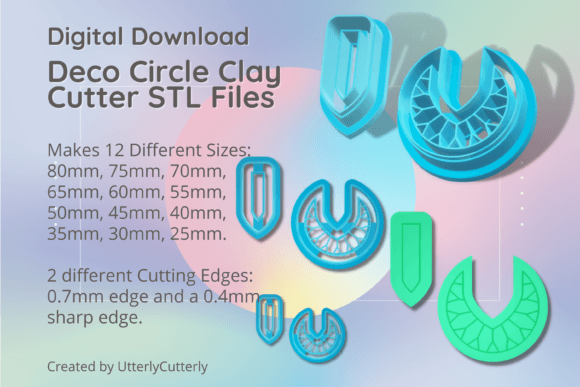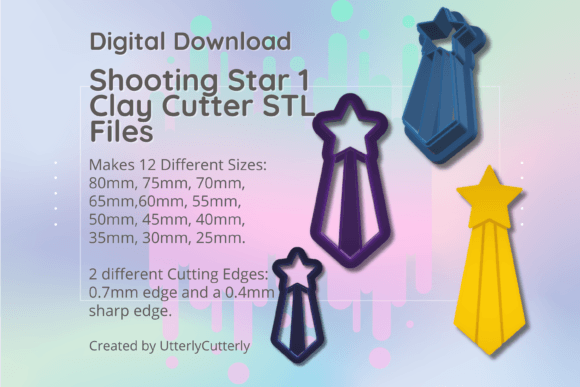
Clay Cutter STL File - Cobweb 2 Design
The intersection of digital fabrication and traditional craft has opened new avenues for creators, particularly those working with polymer clay and confectionery. The Clay Cutter STL File - Cobweb 2 represents a specialized digital asset designed for makers who embrace the whimsigoth aesthetic. This isn't merely a shape; it is a precision-engineered toolset that bridges the gap between intricate Halloween-inspired design and functional manufacturing. Whether you are producing small-batch jewelry or decorating seasonal treats, having access to high-quality STL files ensures consistency and reduces material waste during the prototyping phase.
Versatility in Whimsigoth Aesthetics
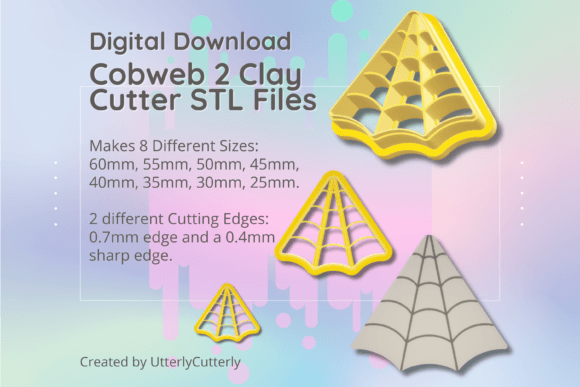
The cobweb motif is a staple in alternative fashion and seasonal decor, but achieving clean, consistent lines by hand is notoriously difficult. This digital download bundle solves that problem by providing eight distinct sizes ranging from 25mm to 60mm. This scalability is crucial for professionals and hobbyists alike. A 60mm cutter might serve as the foundation for a statement pendant or a large fondant decoration for a tiered cake, while the 25mm variant is perfectly scaled for delicate earring components or cookie accents.
For entrepreneurs running an Etsy shop or a local bakery, this size range allows for curated collections rather than isolated products. You can create matching sets—such as a necklace and earring combo using the 50mm and 30mm cutters—or offer tiered pricing for cookies based on size. The whimsigoth style relies on a balance of elegance and macabre detail, and these files are optimized to maintain structural integrity even at smaller scales, ensuring your final product looks professional rather than fragile.
Technical Specifications and Print Optimization
Understanding the technical parameters of an STL file is just as important as the visual design. Poorly modeled cutters lead to failed prints, rough edges, and excessive post-processing. The Clay Cutter STL File - Cobweb 2 includes two distinct cutting edge profiles to accommodate different materials and printer capabilities:
- Standard Edge (0.7mm): Features a 0.7mm wall thickness with a 3mm base and 12mm height. This is the workhorse option, ideal for softer clays, fondant, and cookie dough. The slightly thicker wall provides rigidity, preventing the cutter from warping during use or cleaning.
- Sharp Edge (SE): Abbreviated as SE in the file list, this version utilizes a 1mm support wall tapering to a precise 0.4mm cutting edge. It shares the same 3mm base and 12mm height but is engineered for detailed polymer clay work where crisp definition is paramount.
Both variations feature a standardized 12mm height, which is ergonomically optimal for applying even pressure without discomfort. If you are printing these files, ensure your slicer settings respect the minimum wall thicknesses. Using a 0.4mm nozzle is generally recommended for the Sharp Edge variant to accurately reproduce the fine geometry, while a 0.6mm nozzle can speed up production for the Standard Edge versions without sacrificing quality.
Practical Applications Across Mediums
While marketed heavily toward jewelry makers, the utility of this cobweb design extends across multiple creative disciplines. Understanding how to leverage the tool in different contexts maximizes the return on your digital purchase.
Polymer Clay Jewelry and Accessories
In jewelry making, the sharpness of the cut dictates the amount of sanding required post-bake. The SE variant significantly reduces finishing time. When working with translucent or metallic clays common in whimsigoth designs, a clean cut preserves the surface texture. Additionally, if utilizing the embossing lines included in the design, remember they are 10.5mm tall. This requires a clay sheet thickness greater than 1.5mm to prevent bottoming out. This depth creates a substantial relief that catches light beautifully, adding dimension to barrettes and pendants that flat cutouts cannot achieve.
Culinary Arts and Confectionery
Food safety and ease of release are primary concerns when using 3D printed tools in the kitchen. The Standard 0.7mm edge is preferable here. The smoother, rounded profile glides through cookie dough and fondant without dragging or tearing. For bakers, the 40mm to 60mm sizes are excellent for creating uniform cookies that bake evenly. In sugar art, the intricate web pattern serves as a guide for painting or dusting, allowing decorators to add color precisely within the raised boundaries created by the cutter.
Efficiency and Workflow Integration
Time is the most valuable resource for any maker. Digital files like the Clay Cutter STL File - Cobweb 2 streamline production workflows. Instead of spending hours sculpting a master mold or attempting to carve webs freehand, you can print a complete set of tools overnight. This shifts your focus from tool-making to creation.
For educators and workshop leaders, these files provide a reliable teaching aid. Students can learn about scale, proportion, and texture application using identical tools, ensuring that learning outcomes are based on technique rather than variable equipment quality. The availability of weekly updated STL files in the store also means your toolkit can evolve with trends, keeping your offerings fresh without significant capital investment in physical inventory.
Considerations for Selection and Use
Before downloading, assess your specific needs against the provided specifications. If your primary focus is ultra-fine jewelry, prioritize the SE files and ensure your printer is calibrated for high-detail resin or FDM printing. If you plan to use the cutters for both clay and food, consider printing the Standard Edge in PETG or food-safe PLA, and reserve the Sharp Edge exclusively for non-food crafting to avoid cross-contamination risks associated with micro-scratches in plastic.
Remember that this is a digital product. Success depends on your ability to interpret the file data and apply appropriate printing parameters. Test prints are always recommended before committing to a full batch. Verify the dimensional accuracy of your printer; a 60mm file should yield a 60mm cutter. Calibration ensures that when you design a jewelry backing or a cookie stencil digitally, it will align perfectly with the physical cutter.
Ultimately, the value of this bundle lies in its specificity and build quality. It removes the guesswork from creating complex geometric shapes, allowing artists to focus on surface treatment, color theory, and assembly. By integrating these precision tools into your studio or kitchen, you elevate the perceived value of your handmade goods through consistency and professional finish.