Boho Square Combo 1 Clay Cutter - STL Digital Download Guide
The Boho Square Combo 1 Clay Cutter - STL Di offers a streamlined solution for polymer clay artists and cookie decorators who need precise, geometric shapes without the wait of physical shipping. This digital download provides immediate access to a versatile bundle designed specifically for 3D printing at home or through a local service. Rather than purchasing a single fixed tool, this pack empowers creators to manufacture their own high-quality cutters tailored to specific project requirements. The appeal lies in the combination of aesthetic versatility and technical precision, allowing for everything from delicate jewelry components to substantial baked goods.
However, transitioning from buying physical tools to printing your own requires a shift in mindset. Many makers encounter frustration not because the files are flawed, but because they misunderstand how to leverage the specific parameters included in this STL set. To get professional results from the Boho Square Combo 1 Clay Cutter - STL Di, you must understand the distinction between the two included edge types and select the correct size hierarchy for your medium. Overlooking these details often leads to broken prints, distorted clay, or wasted filament.
Distinguishing Between Edge Types to Prevent Failure
A common mistake when downloading cutter bundles is assuming all files serve the same purpose. This pack includes two distinct cutting edge profiles, and using the wrong one for your specific material is the primary cause of dissatisfaction. Understanding the mechanical difference between these edges is essential for preserving both your printer nozzle and your clay.
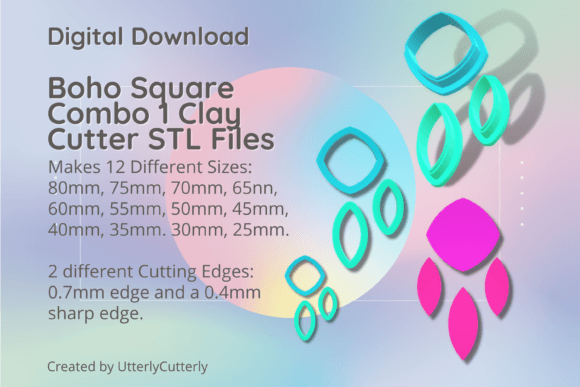
- Standard 0.7mm Wall: This version features a 0.7mm wall thickness with a 3mm thick base and a 12mm height. It is engineered for durability and ease of printing. Beginners should start here, as the thicker wall reduces the risk of print failure and creates a sturdy tool that can withstand significant hand pressure. This is generally the superior choice for cookie dough or firm polymer clay where extreme sharpness is less critical than structural integrity.
- Sharp Edge (SE): Abbreviated as SE in the file names, this variant has a 1mm support wall tapering to a 0.4mm cutting edge. While it produces cleaner cuts in soft polymer clay and reduces drag, it is more challenging to print successfully. The thin edge requires optimal cooling and precise flow calibration. Attempting to print the SE version on an uncalibrated machine often results in clogged nozzles or fragile edges that snap during demolding.
If you are new to printing functional tools, avoid the temptation to immediately use the Sharp Edge files simply because they sound superior. Test the standard 0.7mm wall first to verify your printer’s dimensional accuracy. Only move to the SE files once you have confirmed your machine can handle fine details without extrusion issues.
Navigating Size Selection and Embossing Limitations
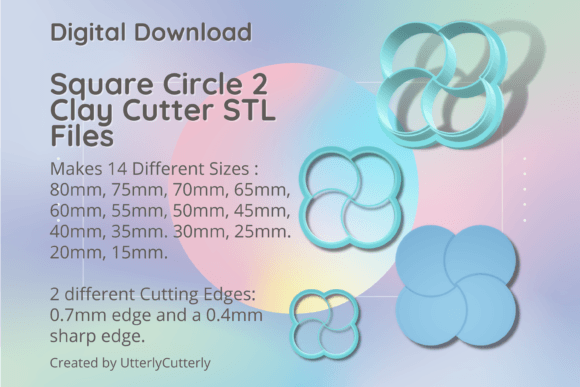
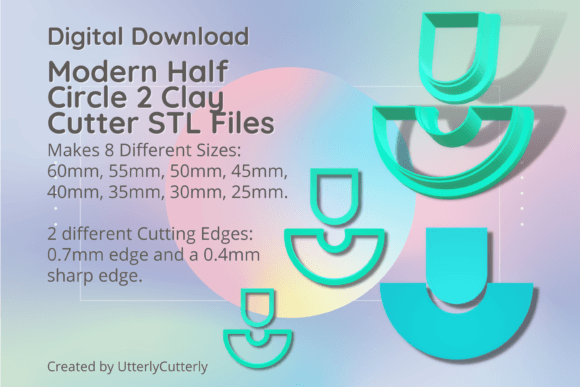
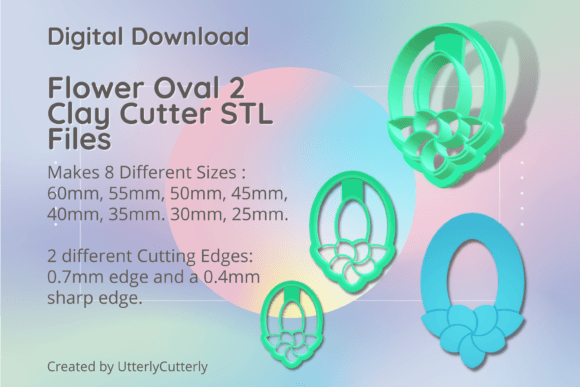
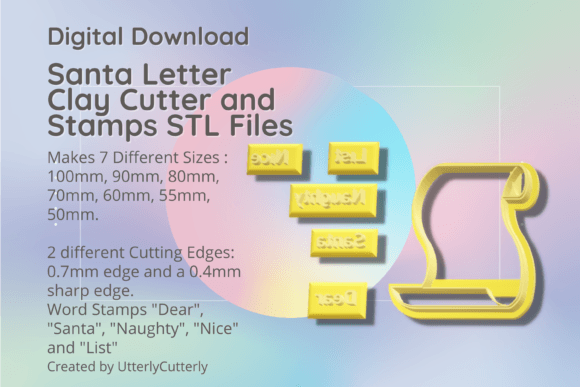
This bundle includes twelve sizes ranging from 25mm to 80mm, measured from the longest ends. A frequent error occurs when users assume these measurements refer to the width of the square rather than the diagonal or maximum span. Misjudging dimensions leads to printing cutters that are either too large for jewelry findings or too small for intended cookie designs. Always measure your workspace or mold constraints against the longest dimension listed before queuing a print.
Furthermore, creators must respect the embossing line specifications. If your chosen design includes internal embossing details, those lines are 10.5mm tall. This is a critical technical constraint. You must use clay that is at least 1.5mm thick to accommodate this depth. Using thinner clay will result in the embossing lines punching completely through the material, ruining the piece and potentially damaging your work surface. Conversely, if you intend to work with very thin clay sheets for intricate jewelry, you should avoid designs with deep embossing or modify your rolling technique to ensure adequate thickness. Ignoring this 1.5mm minimum threshold is the most common reason for wasted clay and failed projects with this specific cutter geometry.
Optimizing Print Settings for Functional Tools
Treating cutter STLs like decorative figurines is another pitfall. Functional tools require different slicer settings to ensure they are food-safe (if applicable) and mechanically sound. For the Boho Square Combo 1 Clay Cutter - STL Di, prioritize strength over speed.
- Wall Count Matters More Than Infill: Increase your wall loops to at least three or four. The cutting force is applied laterally, so perimeter strength prevents the cutter from flexing or splitting. High infill percentages do little to help if the outer walls are weak.
- Brim Usage for Thin Bases: Although the base is 3mm thick, the footprint of smaller sizes (25mm–40mm) can be deceptively small. Use a brim to prevent warping or detachment from the build plate during the initial layers. A detached print mid-job wastes time and material.
- Material Safety Verification: If using these for cookies, verify that your filament is certified food-safe and that your nozzle is stainless steel. Standard brass nozzles can leach lead into plastic. For polymer clay only, standard PLA or PETG is sufficient, but always condition new prints before use.
Evaluating Digital Assets Before Purchase
Before adding this digital download to your cart, perform a realistic assessment of your current setup. Since this is not a physical item, returns are typically not possible after download. Ensure you have a functioning 3D printer capable of handling 0.4mm details if you plan to use the SE files. Check that your build volume accommodates the 80mm size plus any necessary brims or supports.
Additionally, consider your workflow integration. These files are part of a larger ecosystem with new STL files added weekly. If you plan to curate custom combos, organize your digital library immediately upon download. Create folders separated by edge type and size to avoid printing the wrong variant during a busy creative session. Disorganized files lead to duplicate prints and confusion, negating the efficiency benefits of digital manufacturing.
All cutters in this collection are tested before release, but testing assumes a calibrated machine. Your success depends on bridging the gap between the designer's test environment and your personal workspace. By respecting the specific wall thicknesses, adhering to the clay depth requirements for embossing, and selecting the appropriate edge profile for your skill level, the Boho Square Combo 1 Clay Cutter - STL Di becomes an invaluable asset rather than a source of frustration. Approach digital fabrication with the same attention to detail you apply to your clay work, and these tools will serve your creative business reliably.