Mastering Polymer Clay and Cookie Design with the Arch Window 2 & Fairy Door STL Bundle
In the evolving world of digital fabrication and handmade crafts, the intersection of 3D printing and artisanal creation has opened up unprecedented possibilities for makers. Whether you are a professional jeweler, a polymer clay enthusiast, or a baker looking to elevate your cookie decorations, having control over your tools is paramount. The Arch Window 2 Clay Cutter - Fairy Door S and A bundle represents a significant leap forward in this space. This digital download provides high-quality STL files designed specifically for those who own a 3D printer and demand precision, versatility, and aesthetic appeal in their cutting tools.
Understanding the value of this digital asset requires looking beyond the file format itself. It is about grasping how customizable manufacturing fits into modern creative workflows. By downloading these STL files, you are not merely acquiring a shape; you are gaining access to a comprehensive system of sizing and edge profiles that can transform raw materials into intricate works of art. This guide explores the technical specifications, practical applications, and broader significance of integrating digital cutter designs into your creative repertoire.
The Shift Toward Digital Craft Tools
Traditionally, crafters relied on mass-produced metal cutters that offered limited variety and fixed sizes. If a specific design was unavailable or the wrong dimension, the project had to be compromised. The advent of desktop 3D printing has democratized toolmaking, allowing creators to produce bespoke equipment on demand. The Arch Window and Fairy Door collection exemplifies this shift. These are not physical items shipped to your doorstep; they are digital blueprints that empower you to manufacture exactly what you need, when you need it.
This model aligns perfectly with the principles of sustainable and efficient making. Instead of purchasing plastic-wrapped tools that may only serve a single purpose, you utilize biodegradable PLA or durable resin to print reusable assets. Furthermore, because new STL files are added to the store weekly, your library of tools can grow organically alongside your skills and business needs. This agility is essential in today’s fast-paced creative economy, where trends shift quickly and customization is highly valued by clients and customers alike.
Decoding Technical Specifications: Size and Versatility
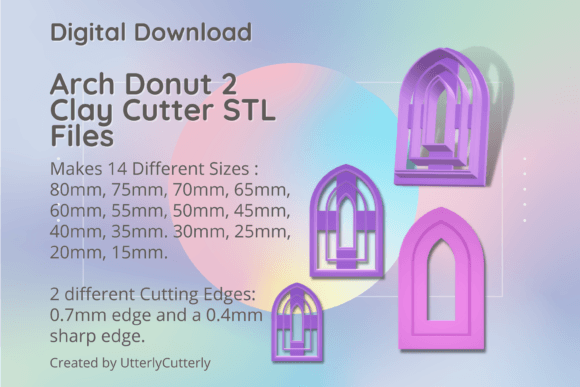
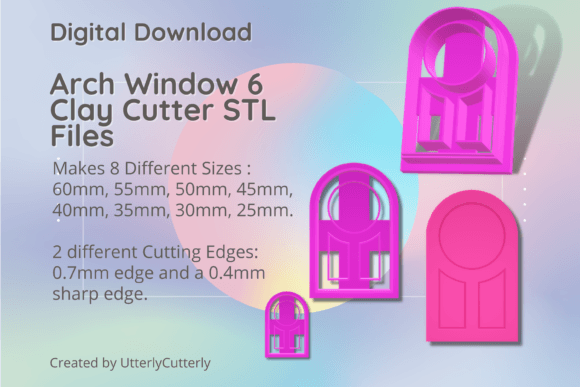
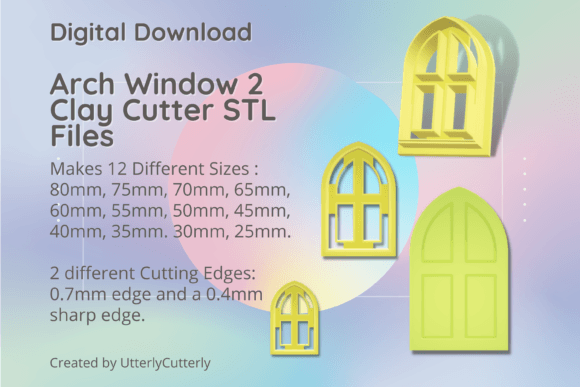
One of the most common misunderstandings among beginners in 3D printed cutters is the assumption that "one size fits all." In reality, successful jewelry and cookie design relies heavily on proportional scaling. This specific bundle addresses that need by including 12 distinct sizes. When measured from the longest ends, the available dimensions are:
- 80mm, 75mm, and 70mm (Ideal for large cookies or statement pendants)
- 65mm, 60mm, and 55mm (Perfect for standard earrings and medium decor)
- 50mm, 45mm, and 40mm (Versatile mid-range sizes)
- 35mm, 30mm, and 25mm (Excellent for delicate charms and miniature details)
Having this granular range allows you to curate custom combos easily. For example, a jewelry maker might use the 60mm cutter for a necklace pendant and the 30mm version for matching stud earrings, ensuring visual consistency across a collection. Similarly, bakers can create tiered cookie sets for weddings or holidays without struggling to find compatible metal tins. The ability to scale designs digitally before printing eliminates waste and ensures every piece fits its intended purpose perfectly.
Understanding Cutting Edge Profiles
Beyond size, the geometry of the cutting edge dictates the finish of your final product. This bundle includes two specialized cutter types, each engineered for different outcomes. Understanding the difference between these profiles is crucial for achieving professional results.
- The Standard Wall Profile: This cutter features a 0.7mm wall thickness with a 3mm thick base and a total height of 12mm. This profile offers durability and rigidity, making it excellent for general-purpose cutting where structural integrity of the tool is prioritized during the pressing motion.
- The Sharp Edge (SE) Profile: Abbreviated as SE in the file names, this variant boasts a 1mm support wall but tapers down to a razor-thin 0.4mm cutting edge. Like the standard version, it maintains a 3mm base and 12mm height. The SE profile is designed for cleaner cuts through polymer clay, reducing drag and minimizing the need for post-processing sanding. It is particularly valuable for intricate fairy door details where crisp lines define the aesthetic.
Practical Applications: From Clay to Confectionery
The versatility of the Arch Window and Fairy Door designs makes them relevant across multiple disciplines. However, users must understand the material constraints to avoid frustration. A critical specification to note is the embossing line height. If the design includes internal embossing details, they are set at 10.5mm tall.
This measurement serves as a functional limit. To capture these details effectively, you must work with clay that is thicker than 1.5mm. Attempting to emboss thinner sheets will result in the cutter bottoming out before the detail transfers, or worse, tearing the material. This technical insight highlights why reading STL descriptions is as important as the printing process itself. For cookie decorators, this depth allows for impressive dimensional icing foundations, while clay artists can achieve bas-relief effects that add sophistication to flat jewelry pieces.
Optimizing Your 3D Printing Workflow
Because these files are designed to be easily printed, they cater to both novice and experienced 3D printer owners. However, achieving the best results requires proper slicer settings. When printing the Sharp Edge (SE) variants, ensure your nozzle diameter and layer height are calibrated to reproduce the 0.4mm tip accurately. Using a 0.4mm nozzle with 0.12mm or 0.16mm layer heights is generally recommended for high-fidelity cutter edges.
Additionally, consider your material choice. While standard PLA is sufficient for occasional hobbyist use, those running a business or working with abrasive clays should consider PETG or ABS for increased longevity. The digital nature of this product means you can reprint worn-out tools instantly, but selecting the right filament extends the lifecycle of each print. Always remember that cutter size is measured from the longest ends; verify your printer's bed adhesion and calibration to ensure dimensional accuracy matches the digital file.
Building a Sustainable Creative Business
For entrepreneurs in the handmade sector, efficiency directly correlates to profitability. Sourcing unique cutters from overseas suppliers often involves long lead times and minimum order quantities that tie up capital. By utilizing digital downloads like the Arch Window 2 bundle, you convert a supply chain dependency into an in-house capability.
This autonomy allows for rapid prototyping. Imagine a client requests a specific window-shaped earring design for a weekend market. With physical sourcing, this request might be impossible to fulfill. With an STL library, you can test print, adjust sizing, and produce the final tool within hours. This responsiveness not only secures sales but also builds a reputation for reliability and custom craftsmanship. Furthermore, the weekly release of new files encourages continuous innovation, preventing product stagnation and keeping your shop offerings fresh.
Important Considerations for Digital Downloads
It is vital to clarify that this is not a physical item. Upon completing your transaction, you will receive immediate access to download the STL files. No physical cutter will be mailed to you. This distinction is important for managing expectations and understanding the value proposition. You are purchasing intellectual property and manufacturing data, not a finished good.
This model also carries responsibilities regarding usage rights. Typically, STL files for commercial cutter production allow you to sell the items made with the cutters, but prohibit selling or sharing the digital files themselves. Respecting these terms supports the designers and ensures the continued development of new, high-quality assets. Always review the specific license agreement included with your download to ensure compliance.
Conclusion: Empowering Your Creative Journey
The Arch Window 2 Clay Cutter and Fairy Door STL bundle is more than just a set of shapes; it is a foundational toolkit for modern makers. By combining twelve precise sizes with two distinct cutting profiles, it addresses the nuanced needs of both jewelers and bakers. The transition from physical consumer to digital manufacturer marks a significant step in creative independence, offering unmatched flexibility and cost-efficiency.
Whether you are creating whimsical fairy doors for a boutique jewelry line or elegant arch-window cookies for a seasonal bake sale, these digital files provide the precision required for professional results. As you integrate these tools into your workflow, remember that mastery comes from understanding the relationship between the digital file, the printer settings, and the raw material. Embrace the learning curve, experiment with the different edge profiles, and leverage the scalability of 3D printing to bring your unique artistic vision to life. With new designs arriving weekly, your potential for creation is limited only by your imagination and your willingness to explore the capabilities of digital fabrication.