Lantern 1 Clay Cutter: Vintage Lantern STL Files
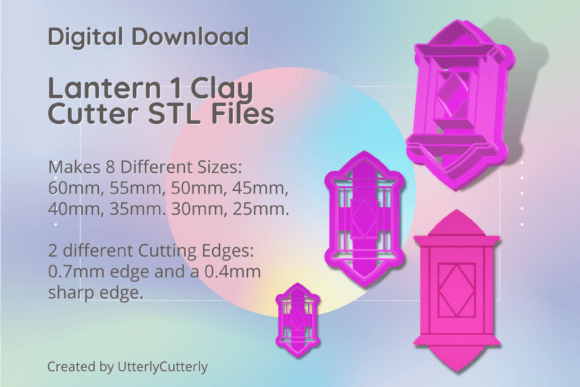
Bringing a touch of antique charm to modern crafting projects requires tools that balance intricate detail with practical functionality. The Lantern 1 Clay Cutter - Vintage Lantern digital download offers precisely this balance for makers working with polymer clay, ceramic clay, or cookie dough. This STL file bundle provides eight distinct sizes and two specialized cutting edge profiles, allowing creators to produce consistent, ornate shapes without the wait times or shipping costs associated with physical tools. Because these are digital files designed for home 3D printing, you gain immediate access to a versatile toolkit that can be reprinted, replaced, or scaled according to your specific project needs.
Digital Flexibility for Diverse Crafting Goals
The value of a digital STL cutter pack extends beyond simple convenience; it fundamentally changes how different makers approach their workflow. For hobbyists exploring vintage aesthetics, having immediate access to files means experimentation is low-risk. If a print fails or a design needs adjustment, the material cost is negligible compared to purchasing a new metal cutter. For professional jewelry designers, this reliability translates to business continuity. Owning the manufacturing capability in-house ensures that production never halts due to supplier delays or discontinued product lines.
Educators and workshop leaders often find digital files particularly advantageous. When teaching a class on Victorian-style jewelry or historical cookie decoration, being able to print twenty identical cutters overnight ensures every student has the exact same tool. This uniformity is difficult to achieve with handmade metal cutters, which can vary slightly between batches. Furthermore, the ability to curate custom combos by mixing these lantern shapes with other weekly STL releases allows instructors to create unique lesson plans that cannot be replicated by students using generic store-bought supplies.
Understanding the Two Cutting Edge Profiles
This bundle includes two distinct cutter types, each engineered for specific materials and outcomes. Understanding the difference is crucial for achieving professional results, whether you are making delicate earrings or rustic baked goods.
- Standard Edge (0.7mm Wall): This version features a 0.7mm wall thickness with a 3mm thick base and a total height of 12mm. It is the robust choice for polymer clay and ceramic applications where durability matters. The thicker wall provides structural integrity during the pressing motion, reducing the risk of distortion when working with firmer clays. It creates a clean definition that holds up well during baking or firing.
- Sharp Edge (SE): Abbreviated as SE in the file names, this variant utilizes a 1mm support wall tapering to a precise 0.4mm cutting edge. Like the standard version, it has a 3mm base and 12mm height. The sharper profile is ideal for softer materials like cookie dough, fondant, or marzipan, where a thin blade reduces drag and preserves delicate textures. It also excels in soft polymer clay when an ultra-crisp outline is required before sanding.
Sizing Strategy for Jewelry and Culinary Arts
Versatility in scale is what separates a novelty item from a staple studio tool. The Lantern 1 Clay Cutter set ranges from 25mm to 60mm, measured from the longest ends. This graduated sizing system supports various applications across different disciplines.
Jewelry makers typically utilize the smaller spectrum. The 25mm, 30mm, and 35mm sizes are perfect for stud earrings, pendants, and charm components. At these dimensions, the vintage lantern silhouette remains recognizable without overwhelming the wearer. The larger 50mm, 55mm, and 60mm options serve entirely different purposes. In culinary arts, these sizes function as substantial cookie cutters for holiday platters or tea parties. For mixed-media artists, the larger scales work beautifully for wall art, decorative tiles, or sculptural elements where the lantern shape acts as a focal point rather than a wearable accessory.
Having all eight sizes available simultaneously allows for cohesive collection building. A small business owner creating a "Vintage Holiday" line can use the 40mm cutter for necklace pendants and the 60mm cutter for matching gift tags or packaging seals. This visual consistency strengthens brand identity in ways that mismatched, individually sourced cutters cannot.
Technical Considerations for Embossing and Printing
Makers should note specific technical parameters to ensure successful prints and functional tools. If the design includes embossing lines, they stand 10.5mm tall. This specification dictates that your clay slab must be thicker than 1.5mm to accommodate the relief without bottoming out. Testing your clay thickness with calipers before cutting prevents frustration and wasted material.
All files have been tested prior to release to verify printability and cutting performance. However, optimal results depend on your printer calibration. Ensure your bed leveling is precise, as the 12mm height and relatively narrow walls require good first-layer adhesion. Using a brim or raft may be necessary for the smaller 25mm and 30mm cutters to prevent warping during the print process. Since these are digital downloads, you retain the freedom to adjust slicer settings—such as infill density or perimeter count—to fine-tune the tool’s rigidity for your specific material preferences.
Evaluating Fit for Your Creative Practice
Determining whether this STL bundle aligns with your current needs involves assessing both your equipment and your artistic direction. Beginners benefit from the low barrier to entry; learning to print your own tools demystifies the fabrication process and builds confidence. The inclusion of two edge types serves as an educational platform, helping new makers understand how tool geometry affects material behavior.
Experienced users and entrepreneurs should evaluate the long-term utility. Does the vintage lantern aesthetic fit your existing catalog? Can the size range fill gaps in your current inventory? For those already running a 3D-printed cutter business, adding tested, reliable designs saves development time. Instead of spending hours modeling and testing a complex ornate shape, you can integrate a proven file into your shop immediately.
Consumers and hobbyists who do not own a 3D printer should consider this purchase only if they plan to acquire one or have access to a local makerspace. While the upfront cost of digital files is lower than physical tools, the value proposition relies entirely on your ability to manufacture them. Conversely, for those with printing capabilities, this pack represents significant savings over buying eight individual metal cutters, alongside the added benefit of unlimited replacements.
Curating a Comprehensive Digital Library
This Lantern 1 pack is designed to integrate seamlessly with other STL files, supporting a modular approach to tool acquisition. New designs are added weekly, encouraging makers to build a comprehensive library over time rather than investing heavily in a single purchase. This model suits creators whose styles evolve seasonally or trend-based businesses that need to pivot quickly.
Ultimately, the Lantern 1 Clay Cutter - Vintage Lantern bundle is more than a shape; it is a flexible manufacturing asset. Whether you are stamping out hundreds of cookies for a market stall, designing a signature jewelry line, or simply enjoying a weekend of creative exploration, having control over your tooling empowers better outcomes. By understanding the distinctions between edge types, respecting size measurements, and leveraging the digital format’s inherent adaptability, you can transform a simple STL file into a cornerstone of your creative practice.