Boho Shape 1 Clay Cutter - Mid Century M: Digital STL Files for Custom Creations
Creating distinct, textured jewelry or artisanal cookies often comes down to having the right silhouette. The Boho Shape 1 Clay Cutter - Mid Century M digital download provides an immediate solution for makers who want that specific retro-modern aesthetic without waiting for shipping. This STL file bundle is designed specifically for 3D printer owners who need versatile, tested tools for polymer clay, ceramic clay, or even dough. Rather than settling for generic shapes found in big-box craft stores, this mid-century inspired design allows you to curate a unique visual identity for your brand or personal projects.
Because this is a digital product, access is instant upon payment. You aren't buying a physical plastic cutter; you are acquiring the manufacturing data to produce as many cutters as you need, whenever you need them. This shifts the dynamic from consumer to creator, giving you full control over your tool inventory.
Real-World Applications for the Mid-Century Aesthetic
The "Mid Century M" profile isn't just a shape; it is a design language. In practice, this organic yet geometric form serves multiple creative industries and hobbyist niches effectively.
Polymer Clay Jewelry Making
For earring designers, the 25mm and 30mm sizes in this bundle are workhorses. The mid-century curve translates beautifully into statement studs and lightweight dangle earrings. When using the Sharp Edge (SE) variant included in the files, the clay releases cleanly with minimal sanding required. This is crucial when working with translucent clays or metallic finishes where fingerprints and post-processing marks are highly visible. The 0.7mm wall version offers more durability for thicker, marbled clay blends that might otherwise distort a thinner blade.
Ceramics and Pottery
Potters throwing slab-built vessels or creating decorative tiles will find the larger 50mm, 55mm, and 60mm sizes particularly useful. The Boho Shape 1 Clay Cutter - Mid Century M creates consistent motifs for repeating patterns on mugs, plates, or wall hangings. Since the embossing lines in these files are set at 10.5mm tall, they interact predictably with clay slabs rolled to 1.5mm or thicker. This depth ensures the impression remains crisp even after the clay shrinks during drying and firing, preventing the design from disappearing under glaze.
Artisan Baking and Cookie Decorating
Bakers specializing in vintage-themed events, retro weddings, or boutique bakery displays can utilize the food-safe printing guidelines associated with these STLs. The 40mm and 45mm sizes hit the sweet spot for standard decorated sugar cookies. Having eight distinct sizes means you can create a graduated set of cookies for tiered displays or nesting box sets, maintaining perfect proportion across the entire collection without hunting for mismatched cutters from different manufacturers.
Choosing Between Cutting Edge Profiles
This bundle includes two distinct engineering approaches to cutting edges. Understanding when to use each prevents frustration and material waste.
- Standard 0.7mm Wall: With a 3mm thick base and 12mm height, this is the robust option. It provides structural rigidity that prevents warping during printing and bending during use. Choose this for firm clays, dense cookie doughs, or when you plan to use the cutter repeatedly over hundreds of cycles. The slightly wider edge leaves a softer bevel on clay, which some artists prefer for a rustic, handmade look.
- Sharp Edge (SE): Abbreviated as SE in the file names, this features a 1mm support wall tapering to a precise 0.4mm cutting edge. Despite the finer blade, it maintains the same 3mm base and 12mm height for handling comfort. This is the professional choice for detailed polymer clay work where clean, vertical sides are non-negotiable. It slices through conditioned clay with less resistance, reducing drag marks. However, it requires careful print calibration to ensure the thin edge adheres properly to the build plate.
Sizing Strategy for Cohesive Collections
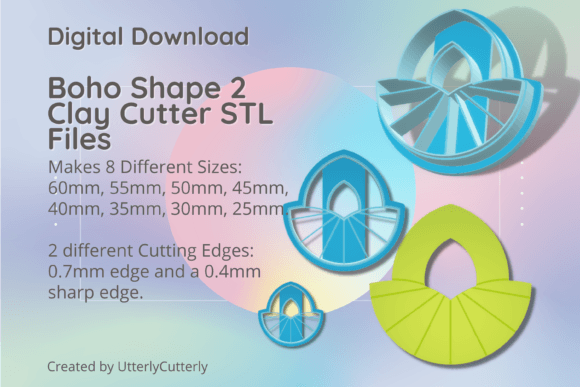
The inclusion of eight sizes—ranging from 25mm to 60mm—is intentional. Sizing is measured from the longest ends of the shape, ensuring predictable scaling. In real-world curation, this range solves several common problems:
- Nesting Designs: Use the 60mm and 55mm cutters to create outer frames, then use the 30mm or 25mm to punch out centers or create matching accent pieces.
- Material Conservation: Smaller sizes allow you to utilize clay scraps efficiently. After cutting large statement pieces with the 50mm cutter, the remaining irregular scraps can often yield 25mm or 30mm components for smaller jewelry findings.
- Product Line Expansion: If you sell finished goods, offering the same design in multiple price points becomes simple. A 60mm pendant commands a higher price than a 25mm stud, but both share the same recognizable brand aesthetic derived from the same STL source.
Practical Considerations Before Printing
While these files are tested before sale, successful outcomes depend on matching the digital specifications to your physical setup. The embossing lines being 10.5mm tall is a critical specification. If your clay slab is thinner than 1.5mm, the embosser may bottom out or tear the material. Always measure your roller guides or slab thickness before selecting the embossing function.
Print orientation matters significantly for cutter longevity. These STLs are designed to be printed upright on their base. The 3mm thick base provides ample surface area for bed adhesion, which is essential for the tall, narrow geometry of a cutter. Using a brim is rarely necessary if your first layer calibration is dialed in, but avoid rafts as they can compromise the flatness of the cutting edge.
Material selection should align with intended use. PLA is sufficient for most polymer clay applications and is easy to print. PETG or ABS offers better heat resistance if you plan to wash cutters in warm water or use them near kilns. For food contact, always verify that your filament manufacturer certifies the material as food-safe and understand that FDM printed parts have layer lines that can harbor bacteria; sealing with a food-grade epoxy is often recommended for commercial baking use.
Building a Modular Tool Library
One of the most practical aspects of adopting digital cutters like the Boho Shape 1 Clay Cutter - Mid Century M is the ability to build a cohesive ecosystem. New STL files are added to the store weekly, allowing you to expand your shape library incrementally. Instead of investing heavily in physical inventory that may not sell, you can test new designs digitally. Print a single prototype, test it with your current clay body or dough recipe, and only commit to batch production if the results meet your standards.
This approach also facilitates custom client requests. If a customer asks for a specific size variation of the mid-century motif for a special order, you can scale the STL within your slicer software (respecting wall thickness minimums) rather than sourcing a completely new tool. The digital format transforms fixed costs into variable costs, making your creative business more agile and responsive to trends. Whether you are producing limited-edition jewelry drops or fulfilling a large catering order, having immediate access to precisely sized, professionally tested cutter files removes one of the most significant bottlenecks in handmade production.